
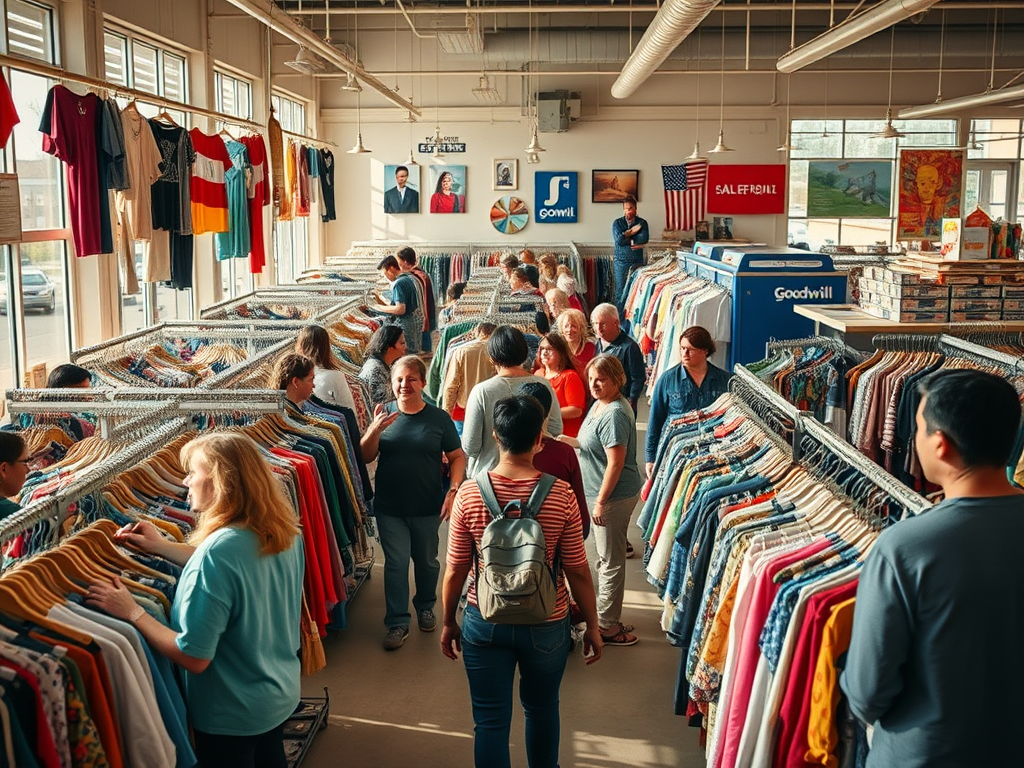
The business plan is genius in its simplicity: collect used goods on a massive scale and resell them.
Most of us have interacted with Goodwill Industries at some point — dropping off a bag of old clothes after cleaning out a closet, or browsing the racks for a vintage find or a few budget-friendly basics. The transaction is fast and easy, no matter which side of it you’re on.
I’ve done both.
History
In 1910, Rev. Edgar J. Helms founded Morgan Memorial Cooperative (MMC) as part of his ministry at Morgan Methodist Chapel in Boston’s South End. He collected used household goods and clothing from wealthier neighborhoods, then hired and trained poor and unemployed people to repair and refurbish them.
The goods were sold to fund wages — creating a self-sustaining social experiment.
The original goal was to offer a “hand up, not a handout.”
In 1915, MMC joined forces with a similar Brooklyn, NY operation called Goodwill. The organization adopted that name, which has endured to the present day.
The programs worked so well that they soon spread to other Methodist congregations and communities across the country.
Goodwill operated within the Methodist Church until 1960. By 1970, it had become a fully secular organization.
Today, Goodwill Industries International is headquartered in Rockville, Maryland, just outside Washington, D.C. But it’s not a single, centralized operation.
It’s a federation of approximately 150 autonomous, community-based organizations across the United States and Canada. A presence that extends to countries including Brazil, Finland, and Italy.
Each local Goodwill runs its own programs, tailored to the needs of its community.
Among the largest of these independent organizations are Goodwill Southern Wisconsin and Goodwill Metro Washington DC. Each operates upwards of 100 stores. Smaller regions may operate only a few stores.
Goodwill Industries and its network of local organizations are registered 501(c)(3) nonprofits, which makes them exempt from federal income tax.
The Mission
Goodwill works to enhance people’s dignity and quality of life by strengthening their communities and helping those having difficulty finding employment reach their full potential through learning and the power of work.
~Mission statement from website
Very much in line with Rev. Helms’s original vision, Goodwill functions as a workforce intermediary, converting retail revenue into free community services.
These are among the core services provided:
- Workforce Development: Converts retail revenue into free community resources, including resume assistance, interview coaching, and digital literacy training.
- Vocational Certification: Provides specialized training and “up-skilling” in high-growth industries like healthcare, logistics, and IT for those without traditional degrees.
- Targeted Re-entry & Support: Offers intensive case management and placement for individuals facing severe barriers, including those with disabilities, past criminal records, or a history of homelessness.
- Job Placement & Retention: Leverages a network of local employer partnerships to place hundreds of thousands of individuals into stable careers annually — helping move people toward financial self-sufficiency.
All worthwhile services, but there is another side of Goodwill, not featured on their website.
The dark side
Behind Goodwill’s charitable veneer lies a corporate machine with significant internal disparities. While regional CEOs can earn upwards of $900,000 (Paddock Post), the organization continues to utilize Section 14(c) certificates to pay some disabled workers “penny wages” based on productivity.
Section 14(c) of the Fair Labor Standards Act permits nonprofits to pay sub-minimum wages to disabled employees based on a mathematical ratio of productivity. If a worker’s disability limits their output to 50% of a non-disabled peer’s capacity, the law authorizes the employer to pay only 50% of the prevailing wage
This practice persisted after the federal government withdrew its 2025 phase-out proposal, leaving several branches legally exempt from paying a minimum wage (Goodwill.org; Federal Register).
Ethical concerns reached a fever pitch in 2025 with a Texas Equal Employment Opportunity Commission (EEOC) disability discrimination settlement (EEOC).
In Lafayette, Louisiana, workers were allegedly forced to forfeit $100 holiday gifts from local police (Star City News). Goodwill workers are not allowed to accept gratuities.
These controversies, paired with CharityWatch’s “Question Mark” rating for financial transparency, paint a troubled picture of the nonprofit giant.
Finally, there is the “thrift grift”: the growing trend of Goodwill pricing free, donated inventory at — or above — big-box retail prices. By mirroring market rates, the organization effectively gentrifies the second-hand market and prices out the low-income families it was built to serve (RetailWire).
Conclusion
As Goodwill moves forward, it remains one of the most complex entities in the nonprofit sector.
It exists as a massive retail engine designed to fund a noble mission: providing a path to self-sufficiency for those the traditional workforce often ignores.
However, the scale of that success is constantly weighed against the modern criticisms of executive pay and pricing strategies. Ultimately, the organization’s legacy will not be defined by its revenue, but by its ability to maintain the trust of the communities that keep its bins full.
The challenge lies in ensuring that the business of thrift never overshadows the humanity of the people it was built to serve.
What is your experience with Goodwill, let me know in the comments.
I write short pieces about the people, trends and brands that shape our culture. If you would like this content delivered to your in-box visit my homepage and sign up.



 senior Scoops
Leave a comment